






High pressure laminate (HPL) wall panels for commercial projects
 Oct 19, 2026|
 View:11
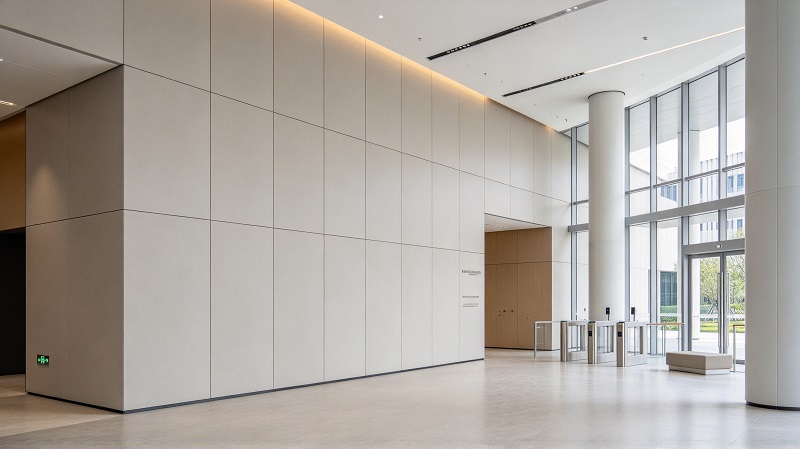
Project teams like high pressure laminate panels because they last long and look good. But approvals often get stuck on another question: does the panel meet the required fire rating, and can the team prove it? A missing test report or an unclear reaction to fire classification can delay a corridor or lobby handover by weeks.
This post explains which fire ratings and standards apply to high-pressure laminate panels, how to check compliance documents, and how to install fire-rated HPL quickly. Safety and speed can work together. Specifiers who pick the right fire-rated product and mounting system get both.
Key Takeaways
A fire rating covers the whole wall system, not just the panel. All parts must match the tested design.
Always check test reports and declarations to confirm the panel meets the required fire class.
Know the common standards: ASTM E-84 Class A or Euroclass B-s1,d0 for wall panels.
Fast installation systems save time, but they must keep the tested fire-rated build-up.
Ask suppliers for fire test documents and installation guidance before you finalize the specification.
Fire Ratings for High Pressure Laminate Panels
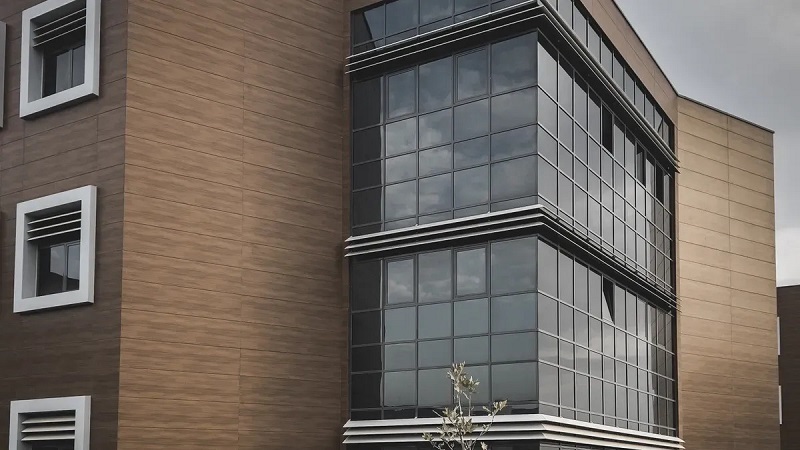
Life Safety and Code Enforcement
This term tells you how a material or wall system acts when it meets flames and heat. In commercial buildings, this rating is a must. It keeps people safe, keeps insurers happy, and lets inspectors approve the work. Fire safety begins with the right product and the right system. Building codes require wall systems to be tested in independent labs using standard methods like ANSI/UL 263. Full-size samples face set heat and flame under the same conditions. Based on how they perform, products get ratings like 30-minute, 1-hour, or 2-hour.
A fire rating covers the whole wall system. Every part—steel studs, Type X gypsum board, fastener spacing, and fire stopping around openings—must work together as a tested system.
This rule matters for high pressure laminate panels. A fire-rated panel by itself does not make a fire-rated wall. The adhesive, backing, and fasteners must all match the tested system. Teams that skip this step fail inspection and lose time on the schedule. Code compliance depends on the whole wall build-up, not just the surface material.
Common Commercial Applications
These panels are a popular choice for hallways, lobbies, healthcare buildings, retail stores, and hotel spaces. Each setting has its own fire-safety rules. Hallways and exit routes usually need the strictest class, because people use them to escape. Healthcare and hotel projects often add smoke limits on top of flame spread limits.
ASTM E-84 is one common standard for HPL panels in commercial work. It sorts products into Class A, B, or C by flame spread and smoke developed index.
Fire Rating Class | Flame Spread Index (FSI) | Smoke Developed Index (SDI) |
|---|---|---|
Class A (Class I) | 0 – 25 | 0 – 450 |
Class B (Class II) | 26 – 75 | 0 – 450 |
Class C (Class III) | 76 – 200 | 0 – 450 |
European projects often use reaction to fire classes such as B-s1,d0 under EN 438. Specifiers also check reaction to fire data for smoke and droplets. TRSK fire-rated HPL meets Class A or B1 ratings. These fire-rated HPL panels give teams a proven option. Fire performance data from the supplier backs up every submittal. High-pressure laminates from TRSK also carry test reports for reaction to fire. High-pressure laminate panels work well in these demanding spaces.
Key Standards and Fire-Rated HPL Classifications
Euroclass and ASTM E-84 Ratings
European and American projects measure fire performance in different ways. Both systems give a clear hpl fire rating that specifiers can check against code requirements.
European projects use the Euroclass system under en 13501-1. The rating B-s1,d0 is the common goal for wall panels. Each part of that label has its own test limit.
Fire rating component | Test method | Criteria for wall panels |
|---|---|---|
Euroclass B (base class) | Single Burning Item (EN 13823) | Fire growth rate ≤ 120 W/s; lateral flame spread < edge of specimen; total heat release in 600s ≤ 7.5 MJ |
Euroclass B (base class) | Ignitability (EN ISO 11925-2) | Flame spread ≤ 150 mm within 60s after 30s exposure |
Smoke class s1 | EN 13823 | Smoke growth rate ≤ 30 m²/s²; total smoke production in 600s ≤ 50 m² |
Flaming droplets d0 | EN 13823 | No flaming particles formed within 600s |
The EN 13501-1 standard does not define a separate "Class B1" rating. The Euroclass system uses "B" as the base class, with suffixes for smoke (s1, s2, s3) and droplets (d0, d1, d2). "Class B1" usually refers to a national legacy classification, such as German DIN 4102, and it is not directly equivalent to Euroclass B-s1,d0.
American projects depend on ASTM E-84. This test groups panels by flame spread and smoke developed.
Class | Flame Spread Index (FSI) | Smoke Developed Index (SDI) |
|---|---|---|
A | 0–25 | 0–450 |
B | 26–75 | 0–450 |
C | 76–200 | 0–450 |
Building codes decide where each class may go. Under IBC Table 803.13, Class A is the strictest and applies to vertical exits and exit passageways in most occupancies. Class B fits many exit access corridors and rooms, especially with sprinklers. Class C covers low-risk back-of-house areas. NFPA 101 Section 10.2 matches these limits and adds rules for assembly and healthcare occupancies. A class a fire rated panel therefore opens more applications than a Class B product. TRSK high pressure laminate achieves Class A or B1 fire ratings and is tested for fire-retardant properties.
EN 438 and CE Marking
EN 438-7 sets performance characteristics and test methods for high-pressure laminates used as wall and ceiling cladding. Together they cover surface hardness, wear resistance, dimensional stability under humidity cycling, and reaction to fire.
CE marking is required for construction products sold in the European Economic Area under the Construction Products Regulation (EU) 305/2011. For facade cladding, CE marking relies on EN 438-7 or a European Technical Assessment. A Declaration of Performance must come with the mark and declare essential characteristics:
reaction to fire
flexural strength
impact resistance
durability
content and/or release of dangerous substances
NFPA 286 and UL acceptance criteria also apply to some interior finish assemblies. These full-room corner tests show how a wall lining acts in a real fire scenario. Specifiers should treat reaction-to-fire classifications as the starting point, not the whole story. The difference between standard vs fire-rated hpl often sits in these documented test results. TRSK fire-rated HPL carries test data for reaction to fire, and every fire-rated panel ships with supporting reports.
Verifying Compliance Documentation
Test Reports and Declarations of Performance
Paperwork decides if a submittal moves forward. Project teams should ask the supplier for a clear set of documents before approval.
A valid fire test report from an approved lab
A product inspection report that matches the material delivered
A quality certificate plus a batch test certificate
Environmental test reports, like formaldehyde emission and VOC data, when required
Manufacturer qualification and production capability documents
An installation method statement plus compatible adhesive and substrate information
The fire test report must match the supplied panel exactly: model, thickness, surface finish, core type, fire classification, and intended use. A mismatch can fail acceptance inspection. Teams should also ask for the CE marking and the reaction to fire Euroclass rating, such as B-s1,d0, backed by the test report, not just a general compliance statement. TRSK puts its high-pressure laminates through strict testing for physical, chemical, climatic, and fire-retardant properties, so buyers get documented evidence instead of claims.
Local Authority and Fire Engineer Review
Local building codes can override or add to a Euroclass rating. A fire engineer may accept en 13501-1 data for one use and ask for more evidence for another. The use matters first: interior partition, exterior cladding, or escape-route wall lining each has different requirements. Authorities such as Saudi or UAE Civil Defense may cite specific classes or require local certification along with EU test data. Teams should confirm these rules early, because a late objection delays the schedule.
Inspectors may ask for certificates years after installation, so the project file should hold every report. Complete documentation supports code compliance and keeps fire safety reviews on track. TRSK supplies fire-rated HPL with matching reports, which helps contractors clear approvals and install without delay.
Fast Installation of HPL Panels
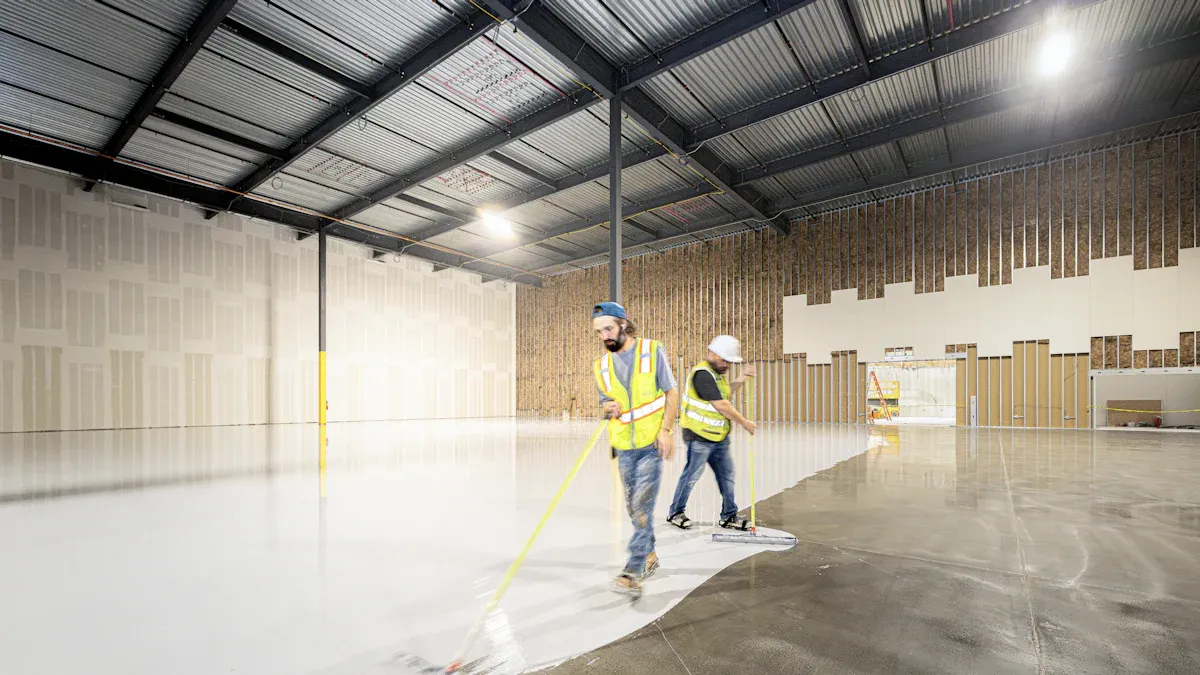
Mounting Systems and Substrates
Speed starts with the right system. Prefabricated or pre-bonded panels come ready to install over most existing surfaces. This takes substrate prep and field-applied adhesive work off the schedule. Teams can also pick from several attachment families, each matched to the wall type and exposure. A clear system choice makes it easier for installers to learn.
System Type | Key Components |
|---|---|
Exposed Fastener Attachment (E1000 Series) | Hat and J channels (mill finish or black anodized); drained back ventilated rainscreen; weather-resistant barrier |
Concealed Fastener Attachment (C2000 Series) | Concealed adjustable bracket; pre-drilled panel backs to receive hanger clip and anchor; aluminum alloy rail (6063-T6) |
PURA NFC by Trespa | Coordinated system of clips, profiles, and fasteners; prefinished panels for installation efficiency |
Lift-and-drop and turnkey wall systems work well for interior jobs. Anodized aluminum trim moldings and accessories give the edges a clean finish. Substrate choice matters too. Plywood and MDF are common backings for high pressure laminate panels. High pressure laminate resists impact and repeated cleaning in busy corridors. Contractors often specify high-pressure laminate panels for lobbies and healthcare spaces. Adhesive selection must match the substrate and the tested build-up. Postforming laminate bends under heat for curved surfaces and corner protection. The reaction to fire classification stays tied to that tested build-up, so any substitution needs approval.
Speed never excuses a shortcut on a fire-rated wall. The adhesive, substrate, and fasteners must match the tested system, or the fire rating no longer applies.
Prefabrication and Sequencing
A repeatable sequence keeps crews fast and ready for inspection. The steps below reflect standard field practice for hpl panels. Each step supports adhesion and a clean edge.
Pre-fabricated or pre-bonded panels arrive ready to install over most existing surfaces, eliminating substrate prep and field-applied adhesive systems.
Crews spread approved adhesive for 100% coverage within 2″ of each edge using a suggested trowel.
Workers flex the panel into the trim and press firmly in place.
They press and roll from center outward to ensure complete adhesion.
Anodized aluminum trim moldings and accessories provide clean transitions and professional edges.
Sequencing protects fire performance. Crews should close openings and seal penetrations before panel closure. They should stage panels by room so the fire-rated hpl never sits exposed to damage. A durable phenolic panel system depends on this discipline. Prefabrication moves cutting and fitting off site, which shortens site time and reduces waste. Shop crews can pre-drill hanger locations and pre-cut trim miters. A phenolic wall panel system with pre-drilled backs and hanger clips installs faster than field-fabricated alternatives. The same logic applies to a phenolic wall panel systems package with coordinated trims. A clean sequence also keeps the fire-rated assembly intact from first panel to final inspection. Good sequencing protects finished faces from damage.
Every fire-rated panel must carry its test report to the site. Inspectors may check the fire-rated hpl against the submittal. The substrate and adhesive must match the tested system. One swapped component can void the rating of the whole wall. Reaction to fire data should travel with each batch. Teams that plan the sequence early avoid rework and failed inspections. TRSK supplies HPL with matching reports and installation guidance, so crews install quickly without weakening the tested assembly.
Specifying Compliant High-Pressure Laminate Panels
Questions for Suppliers
A good specification starts with direct questions. Buyers should ask what board material, thickness, and density range the supplier uses. They should confirm that the tested board matches the quoted production setup. The decorative face needs the same careful check: face grade, adhesive, backing, edge treatment, and a physical sample reference.
Test evidence is the next checkpoint. Suppliers should name the test method, the specimen, and the result they saw. Buyers then check whether the proposed panel and assembly fall within the documented scope. A report for a bare panel may not cover a finished wall build-up. Project conditions matter too. Interior use, traffic, cleaning, and moisture exposure all shape the choice between standard vs fire-rated hpl. Local code and specifier acceptance close the loop.
Fire test reports need careful reading. Confirm the method and edition, the laboratory identity, and the specimen description. Check whether the decorative surface was bare, coated, or faced. Review framing, fixings, joints, cavity, and penetrations. The responsible reviewer then decides if the project match is acceptable. For a phenolic wall panel system, these details protect the fire rating from day one.
TRSK High Pressure Laminate Solutions
Jiangsu TRSK New Material Co., Ltd. ( TRSK) offers a strong reference point for this process. The company brings more than 24 years of HPL experience and runs a 60,000 m² facility under ISO9001 and ISO14001. Its wood grain high pressure laminate panels come in 2440x1220mm sizes with 0.7–1.0mm thickness options. Compact laminate reaches 25mm, and fire-retardant laminates round out the range.
TRSK fire-rated HPL carries Class A or B1 ratings and UL 94 V-0 certification with low smoke emission. These fire-rated panels suit corridors, lobbies, and public spaces. The company tests its high-pressure laminates for physical, chemical, climatic, and fire-retardant properties, so buyers receive documented reaction to fire data. TRSK also supports customization and OEM/ODM work, and it exports to Southeast Asia, Europe, and America. Teams that need fire-rated HPL with clear paperwork and installation guidance can request samples and reports before finalizing the spec.
A correct fire rating, checked compliance, and fast installation all work together as one package. Teams that treat them as separate jobs lose time during approval and on site. A fire-rated HPL panel only works when its test reports match the product delivered and the tested assembly. Fast mounting systems help, but they must keep the same fire-rated build-up. TRSK supplies fire-rated HPL with reaction to fire data and installation guidance, so both goals hold. Before you finalize specifications, ask the HPL supplier for fire test documents, declarations of performance, and fitting advice. That one step keeps the fire rating, the paperwork, and the schedule in line.
FAQ
Which fire rating should a commercial project specify for HPL wall panels?
The answer depends on the space and the local code. Corridors and exits usually need the strictest class. Many teams target Euroclass B-s1,d0 or ASTM E-84 Class A. TRSK hpl panels meet Class A or B1 ratings, and test reports back each submittal.
How does a team confirm a panel's fire performance before approval?
Ask for the test report, the declaration of performance, and the CE certificate. The report must match the delivered panel in thickness, core, and finish. TRSK tests its laminates for fire-retardant properties and supplies matching documents, so reviewers can verify compliance without delays.
Can installers mount fire-rated HPL quickly without weakening the wall assembly?
Yes. Lift-and-drop and turnkey systems speed up the work. Crews still must match the adhesive, substrate, and fasteners to the tested build-up. A swapped component voids the fire rating. TRSK provides installation guidance with every fire-rated order, which keeps fast work and fire safety aligned.
Does a fire-rated panel alone make a fire-rated wall?
No. The whole assembly earns the rating: studs, backing board, fasteners, and fire stopping around openings. A panel carries its own reaction to fire class, yet the wall system must pass as a unit. Teams should confirm both before they finalize the specification.
Why do contractors choose TRSK for compliant HPL wall panels?
Jiangsu TRSK New Material Co., Ltd. (TRSK) brings more than 24 years of hpl experience and runs a 60,000 m² facility under ISO9001 and ISO14001. Its wood grain panels come in 2440x1220mm sizes at 0.7–1.0mm thickness. Fire-rated options ship with test data, and the company supports OEM/ODM work and global export.